Skip to content
Facebook-f
Linkedin-in
Main Menu
Welcome
About
Organising committee
Program
Conference program
Sunday workshop
Keynote speakers
Sponsorship
Our sponsors and exhibitors
Past Conferences
2026
2025
2024
2023
2022
Contact
2018 Conference
Day 1
Day 2
Day 3
Day 4
2019 Conference
Day 1
Day 2
Day 3
Day 4
2022 Conference
Day 1
Day 2
Day 3
Day 4
2023 Conference
Day 1
Day 2
Day 3
Day 4
2024 Conference
Day 1
Day 2
Day 3
Day 4
2025 Conference
Day 1
Day 2
Day 3
Day 4
2026 Conference
Day 1
Day 2
Day 3
Day 4
Concurrent presentation
Exhibitor Innovations
Health Innovation Award Presentation
Health Program Award Presentation
Innovation Award Presentation
Keynote
Opening session
Panel session
Safety Innovation Award Presentations
No items found
A Changed Regulatory Framework
Best practice fatigue management and collaboration
Caring for the worker
Collaboration improving performance
Critical controls
Critical Risk Management Controls & Emerging Hazards
Cultural Improvement
Dust Impacts – Mines and Quarries
Dust Impacts and Controls
Educate through investigations
Educate to improve
Emerging Opportunities
Engineering Safer Equipment
Engineering Safer Operations
Exhibitor innovations
Exhibitor Presentations
Fatigue Management in the Queensland industry collaboration and innovation
Fitness for work
General/Technical
Health
Health & Technical
Health and safety exposures
Health Innovation Award presentations
High reliability organisation innovation
Human/General Factors
Incident reporting and analysis
Innovation Through Research ACARP Project Updates
Leadership Culture & Organisational Learning
Leadership leveraging data
Leading Safe Organisations
Learning from investigations
Lessons learnt – surface mining
Management & Control Assurance
Managing exposure
Occupational Hygiene & Exposure Management
Operational Excellence Technology & Innovation
Our environment
Our Equipment
Our Organisation
Our People
Our Systems
People Performance & Critical Controls
Prevention is better than cure
Protecting Respiratory Health
Respiratory Health
Risk management
Safety Culture
Safety Training Workshop
Simtars
Surface fatal risks
Technical/Ventilation Management
Technological safety
Technology & Digitisation
The Regulator
Underground Coal
Understanding your obligations
Wellbeing
Worker Health Wellbeing & Human Factors
Workforce Health Human Performance & Wellbeing
Working to the future
Workplace culture and reprisal
No items found
336 videos found
14:10
Selby – Intelligent cabin environments, designing for operator wellbeing, not just compliance
2025 Conference
,
Concurrent presentation
,
Day 4
Our Systems
Michael Selby, NB Industries
30:04
Seligmann – Why Being 95% Error-Free is Safer than 99.9%
2022 Conference
,
Concurrent presentation
,
Day 3
Risk management
Dr Ben Seligmann, Research Fellow – Risk Management, Sustainable Minerals Institute, University of Queensland
21:24
Shibi – AI-powered inspections in open-cut coal mining: Enhancing risk management and compliance
2025 Conference
,
Concurrent presentation
,
Day 4
Our Systems
Naaman Shibi, Techs4biz Australia
19:58
Shibi – Paper to platform: How digital and AI-assisted tools are meeting a new generation of mining workers where they are
2026 Conference
,
Concurrent presentation
,
Day 4
Operational Excellence Technology & Innovation
Naaman Shibi Techs4biz Australia
26:07
Shone – From Reacting to Learning: The Next Step in Organisational Effectiveness
2022 Conference
,
Concurrent presentation
,
Day 3
Prevention is better than cure
Andy Shone, Chief Executive Officer, Southpac International
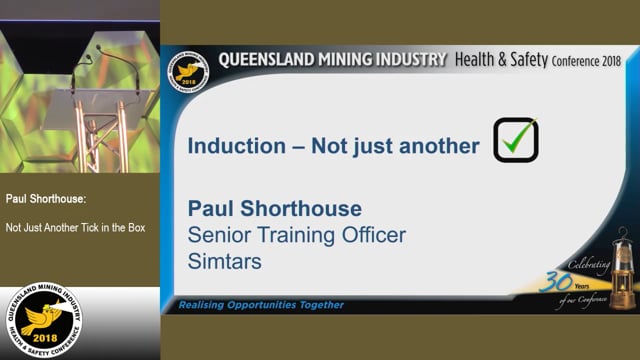
Shorthouse – Not Just Another Tick in the Box
2018 Conference
,
Concurrent presentation
,
Day 3
Human/General Factors
Paul Shorthouse – Senior Training Officer, Simtars ABSTRACT Queensland legislation requires all coal mines, mineral ...
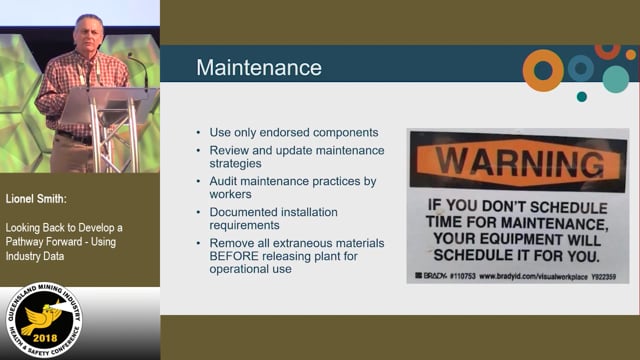
Smith – Looking Back to Develop a Pathway Forward – Using Industry Data
2018 Conference
,
Concurrent presentation
,
Day 4
The Regulator
Lionel Smith – Regional Inspector of Mines, Department of Natural Resources, Mines and Energy ABSTRACT The mining ...
Smith – Managing Cognitive Fatigue and Brain-Centred Hazards
2019 Conference
,
Concurrent presentation
,
Day 3
Cultural Improvement
Warren Smith Executive Consultant, Dekra Insight Australia Organisations commonly put controls in place to address ...
26:08
Smith – Resources, Safety & Health Queensland (RSHQ) going digital: The future of incident reporting
2023 Conference
,
Concurrent presentation
,
Day 3
Our Systems
Lionel Smith Resources Safety and Health Queensland
29:41
Solomon – Brains behaving badly: Why smart people make unsafe safety decisions
2025 Conference
,
Concurrent presentation
,
Day 3
Our People
Dr Brett Solomon, Sentis
«
1
…
26
27
28
29
30
…
34
»
Page 28 of 34