

Natascha Viljoen
Group Head of Processing, Anglo American
Natascha is responsible for Group Processing, a specialist technical services and support function that ensures safe, responsible and optimized processing performance, through step-change technologies and operational excellence.
With a Metallurgical Engineering degree from North-West University and an Executive MBA from the University of Cape Town (Cum Laude), Natascha also serves on advisory boards at the Universities of Cape Town, Stellenbosch, Pretoria and Queensland University’s Julius Kruttschnitt Mineral Research Centre, having previously held a non-executive position on Anglo American’s Kumba Iron Ore Board.
Natascha has previously worked with ISCOR, Anglo Gold, Anglo Platinum, Samancor Chrome, BHP Billiton and Lonmin.
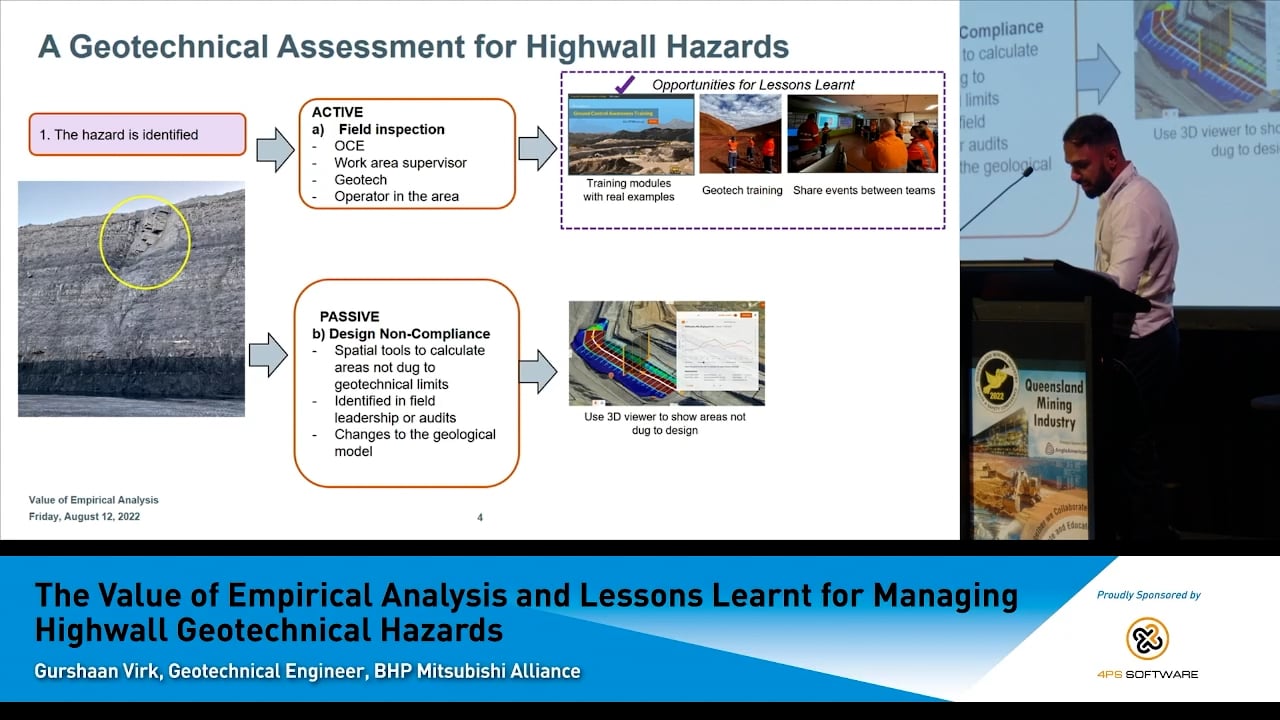
Gurshaan Virk, Geotechnical Engineer, BHP Mitsubishi Alliance
Matthew Wakeford and Luke Perrin
Anglo American
Jarrod Warner
Resources Safety and Health Queensland
Andy Warrington, Business Development Manager – Prescription Eyewear, Bollé Safety
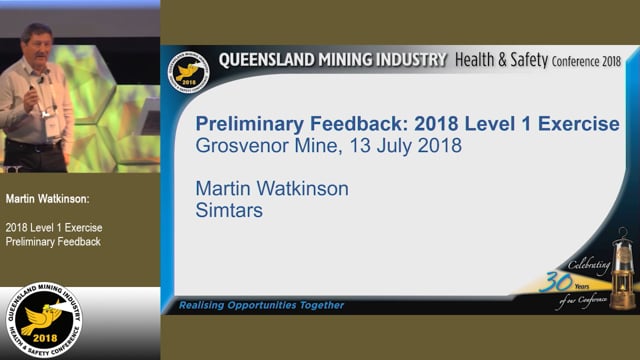
Martin Watkinson – Executive Mining Engineer, Simtars
ABSTRACT
The 2018 Level 1 Mine Emergency exercise held at Grosvenor mine in July 2018 is the 21st Level 1 exercise held in Queensland. This paper and presentation will provide preliminary feedback to industry on the learnings and recommendations from review of the assessor inputs.
The scenario will be explained along with the elements of emergency response that were evaluated. Some video footage will also be utilised to emphasise the learning points. Reference will also be made to the current evaluation of Level 1exercise recommendations being undertaken by the Task Group 4 evaluation team as part of the process for preparing a recognised standard on emergency response.

Dr Trent Watson,
Ethos Health
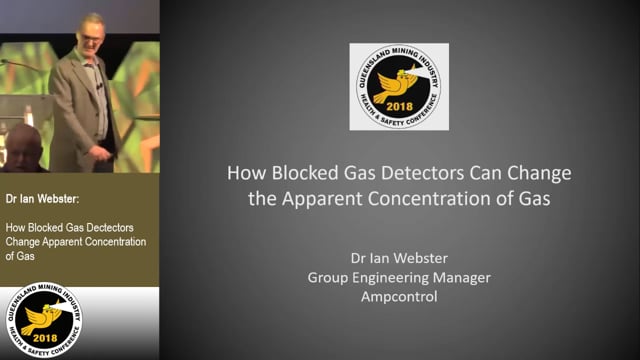
Dr Ian Webster – Group Engineering Manager, Ampcontrol Pty Ltd
ABSTRACT
The operation of a diffusion type gas detectors used in fixed, machine mounted and handheld applications is reliant on the natural equalisation of dissimilar gas concentrations driven by partial pressures inside and outside the detector.
Typically, this equalisation is inhibited (to a greater or lesser degree) by protective filters and barriers surrounding the fragile sensing elements from the typically harsh ambient environments. The accumulation of dust and other foreign matter on the protective filters can further inhibit the diffusion of gas into a detector.
The usual calibration process for a gas detector – typically by a ‘bump’ or ‘challenge’ test – will often fail to detect when a detector is blocked, or partially blocked. This can lead to the ‘calibrated’ detector reading high or low, but with no way to determine if that is the case.
Retrospective examination of records and equipment from Pike River Mine lead to the conclusion that critical detectors were affected by filter blockages, resulting in methane detectors reading approximately one-half of the true concentration.
This presentation explores how a blocked detector can give an erroneous reading, and what steps can be taken to avoid replicating previous mistakes.
Lawrence Webster & Wes Sweet
Anglo American